Best fit teams and buyers.
Who it is for
Brands
Corporate teams
Sports marketers
Production managers
Analytics Notice
Optional analytics improve campaign and lead reporting. Essential behavior works without tracking.
Atmosphere and visibility
Lighting makes an event legible on camera and memorable in the room. Flip & Flash plans looks, fixtures, control, power, rigging assumptions, and operation.
NYC
Venue-aware
One team
Build + operate
Scope
Quote-ready inputs
Common use cases
Helpful for a fast quote
Best fit teams and buyers.
Brands
Corporate teams
Sports marketers
Production managers
Event situations this supports.
Stage looks
Brand reveals
Sponsor moments
Photo-ready environments
Core production support.
Lighting plot concepts
Fixture packages
Console operation
Focus and programming
How scope turns into execution.
Discovery and production goals
Scope, budget, and technical assumptions
Design, fabrication, and AV planning
Prep, logistics, load-in, show operation, and strike
NYC production notes
Flip & Flash scopes lighting design around the operational details that decide whether an event loads in cleanly: freight windows, power, rigging assumptions, fabrication handoffs, content readiness, and onsite decision-makers.
Build the scope around NYC access, floor protection, dock windows, union realities, elevator limits, and neighborhood logistics.
Connect AV, scenic, fabrication, LED, lighting, audio, and content requirements before production details drift apart.
Plan the crew, calls, comms, changes, strike, and recap so execution is as clear as the estimate.
Quote-ready brief
Event date, load-in window, show hours, and strike requirements.
Venue name, city, floor level, dock access, freight path, and power assumptions.
Audience size, footprint, room dimensions, content needs, and finish expectations.
Decks, renders, floorplans, brand guidelines, run of show, or rough sketches.
Relevant production proof
These sample case studies show the operational relationships behind the scope: AV, scenic, fabrication, logistics, content, crew calls, and show-day support.
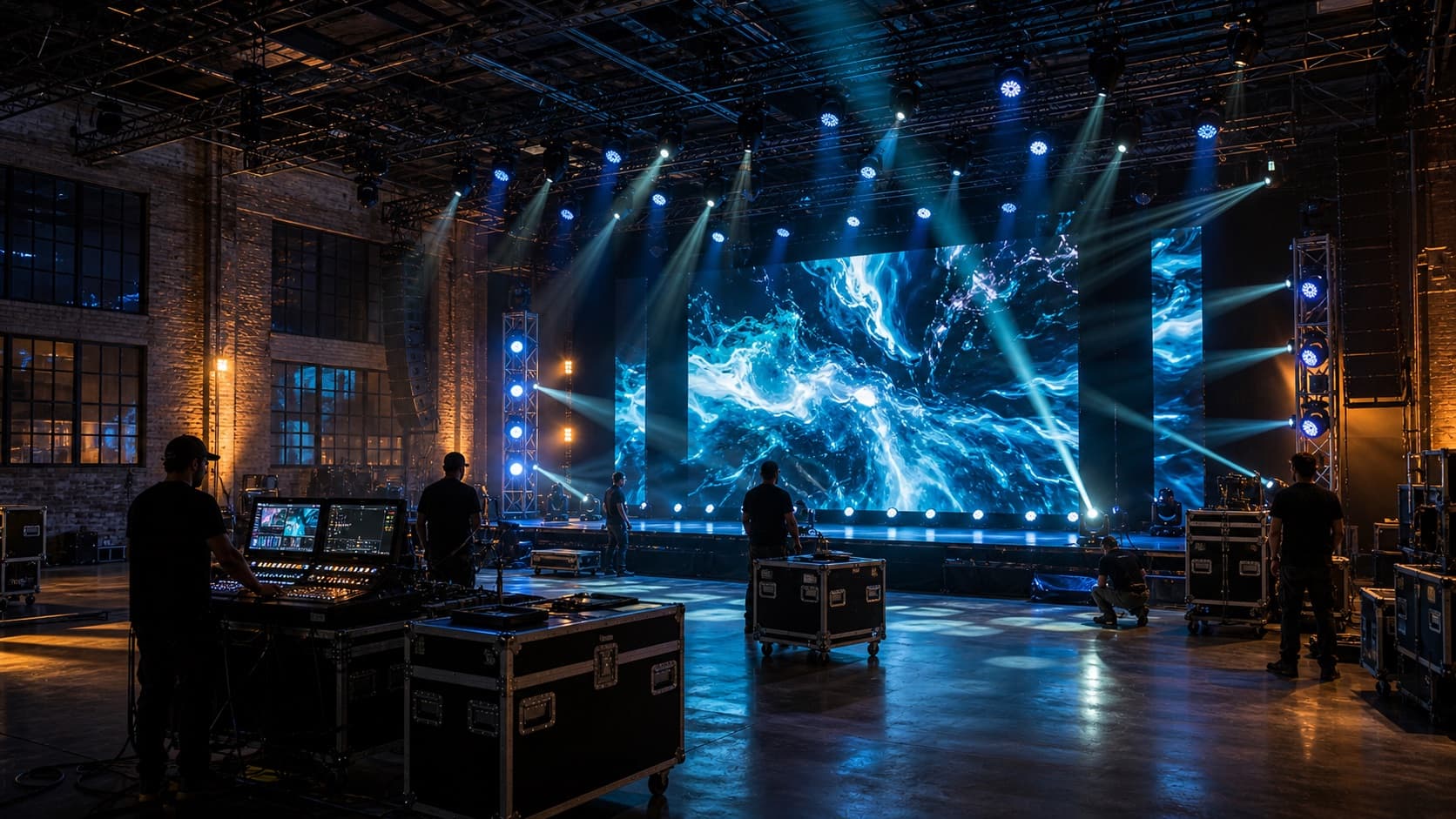
A large-format LED and lighting environment planned for content impact, camera capture, power assumptions, and live operation.
180 sq ft
LED area
12
Lighting looks
10
Crew call
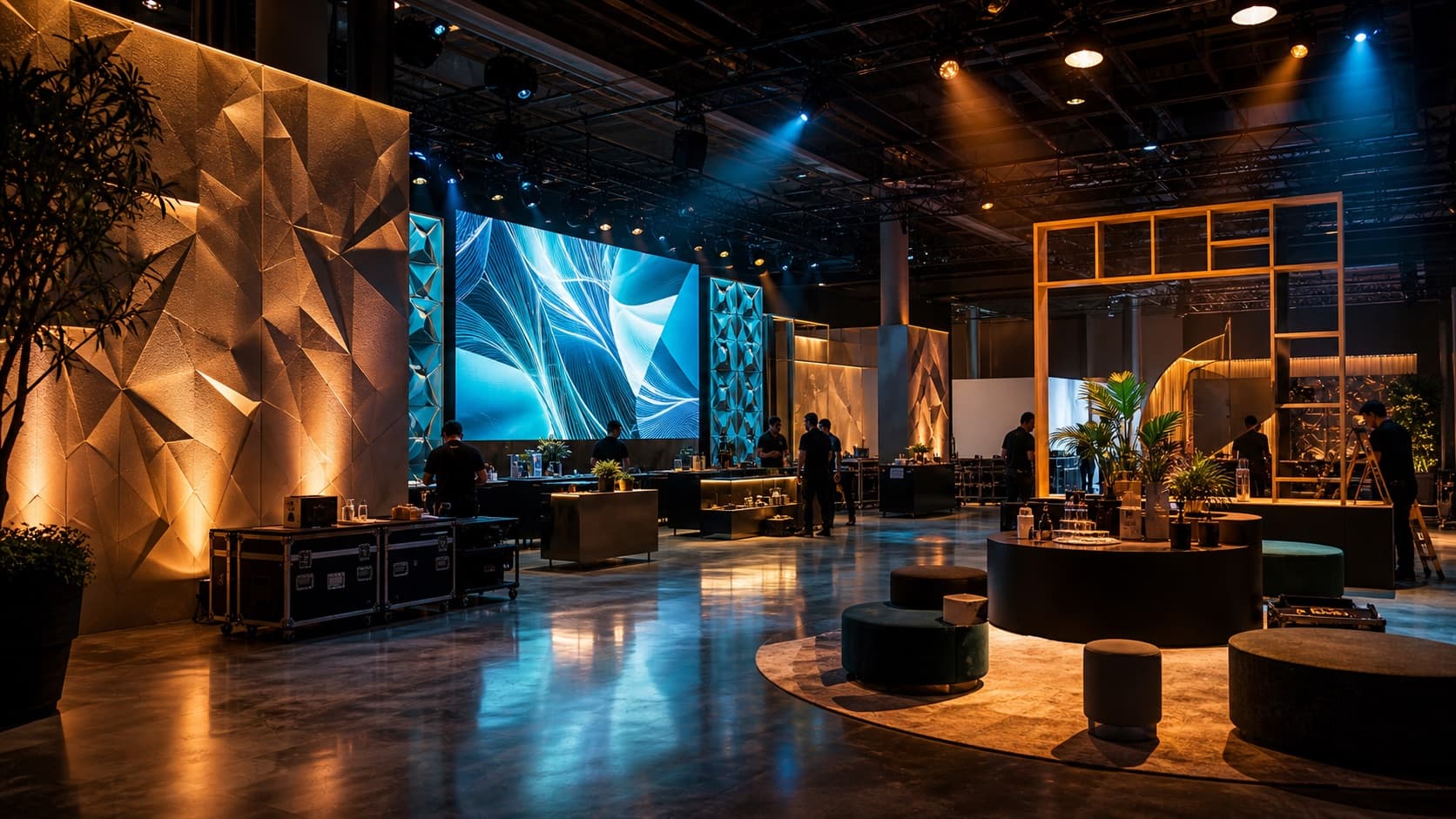
A sample activation environment built around scenic fabrication, LED content, lighting, guest flow, and show-day staffing.
8 hrs
Install window
4
Guest zones
1
Production teams
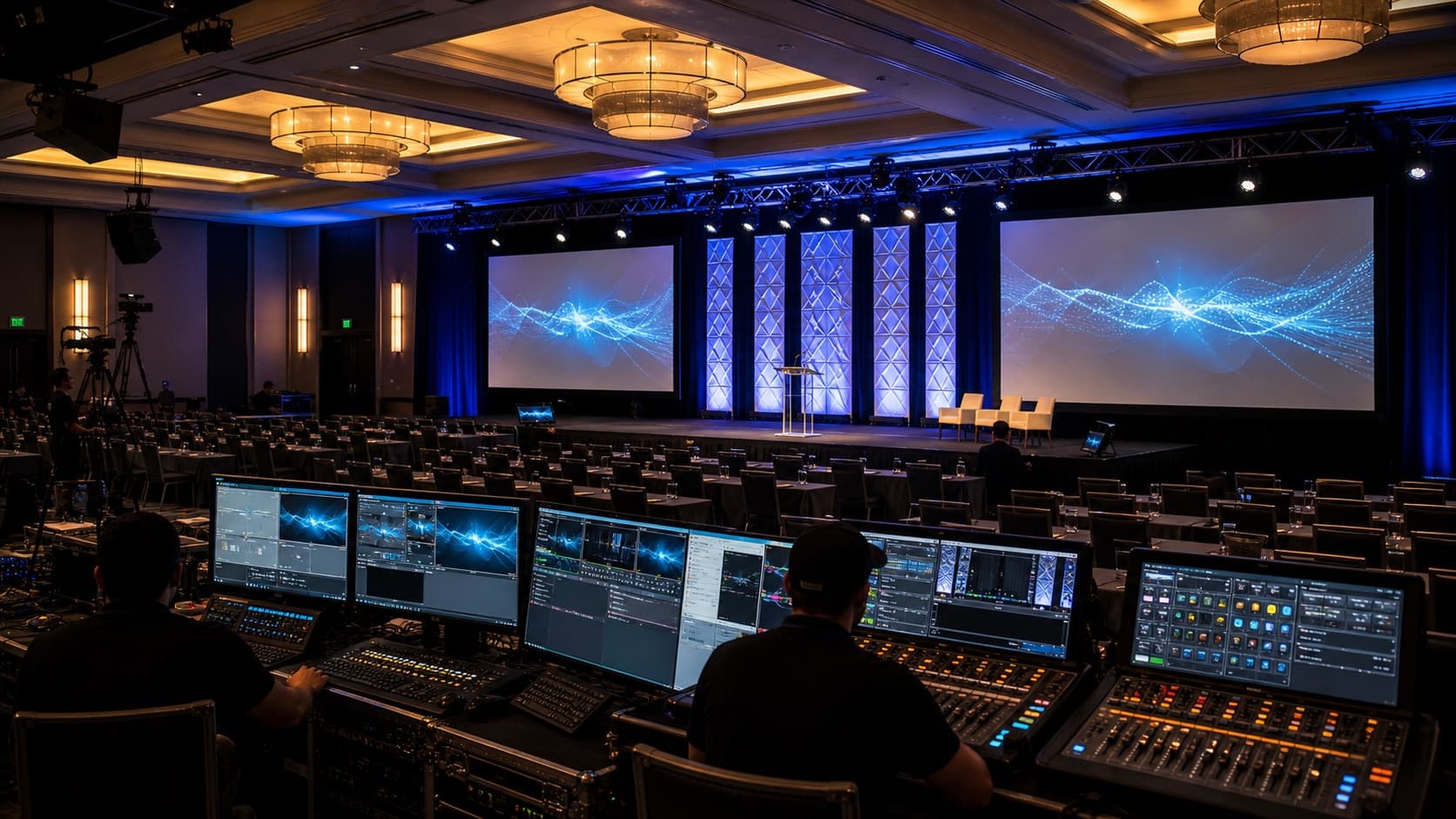
A corporate conference AV package with screens, audio, lighting, playback, rehearsal support, and executive-ready show operation.
450
Attendees
6
Breakouts
2
Show days
FAQ
These answers are intentionally planning-focused so the page can support organic search while still moving qualified buyers toward a useful first conversation.
As soon as a date, venue, or rough concept exists. Early scoping reduces avoidable rental, labor, fabrication, and logistics risk.
Yes. The prototype assumes a production model where creative, technical, logistics, and show teams stay coordinated through one accountable partner.
Yes. Scope can scale from targeted AV support to full production with scenic fabrication, LED, lighting, labor, transport, and show operation.
Related services
Most live events need more than one category. These connected services help keep creative build, AV systems, logistics, and show operation aligned.
AV systems
Audio, video, lighting, switching, distribution, and technical staffing for polished live experiences.
Experiential production
Production for brand activations that need fabrication, AV, lighting, logistics, and reliable show operation.
Built environments
Scenic walls, platforms, branded structures, dimensional elements, and installation-ready event builds.